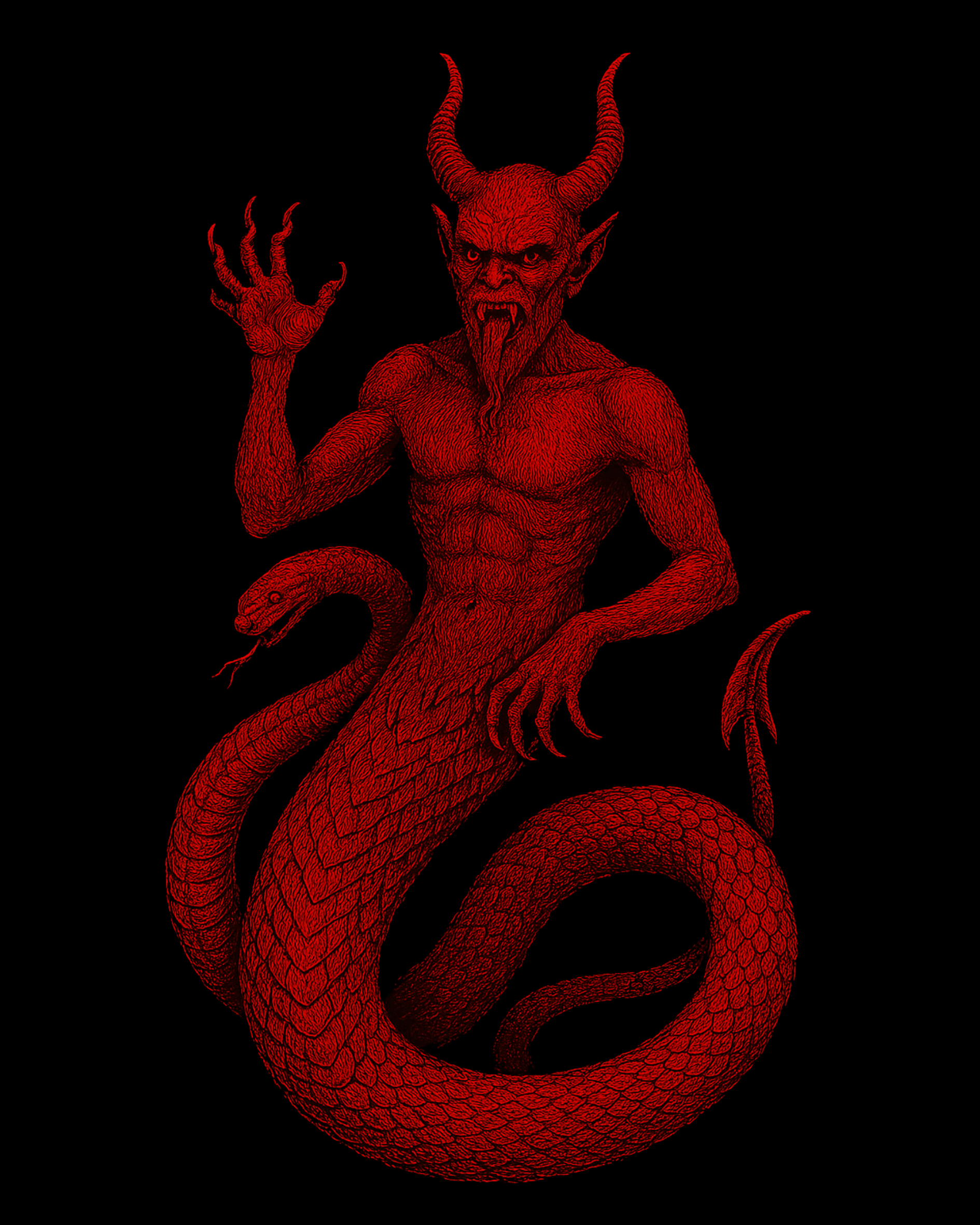
Jinns: The Hidden Beings of Flame, Power, and Mystery
Jinns: The Hidden Beings of Flame, Power, and Mystery
Jinns: The Hidden Beings of Flame, Power, and Mystery
Long before modern religions took shape, long before empires rose and fell, there existed a realm parallel to ours—a shadowed, unseen world teeming with beings born not of earth or heaven, but of smokeless fire. These are the jinn, the spirits of flame and shadow, mentioned in sacred texts, whispered about in folk traditions, and feared by magicians and mystics alike.
Despite centuries of dismissal by mainstream thought, the reality of the jinn has never truly faded. They persist in occult practice, dreams, hauntings, and the lives of those who dare to call them. But what are jinn really? How do they function? What power do they hold? And how can a human safely interact with them?
In this blog, we explore the basics of the jinn realm, their types, powers, nature, and the deep spiritual impact they hold for those walking the path of magick.
Who Are the Jinn?
The term “jinn” comes from the Arabic root j-n-n, meaning “to hide or to be concealed.” This perfectly describes their nature—they are invisible beings, living alongside us in a different frequency, unseen to the naked eye but capable of great interaction with the physical world.
According to Islamic scripture, jinn were created by Allah from nar al-samoom (a smokeless, scorching fire), distinct from humans (clay) and angels (light). However, their lore stretches back to pre-Islamic Arabia, where they were seen as desert spirits, often worshipped or feared for their influence.
They are intelligent, emotional, and possess free will. They can love, hate, build, destroy, marry, reproduce, and form tribes or courts. Their world is structured similarly to ours, but governed by different laws of time and space.
Different Types of Jinn
There is no single kind of jinn. Over the centuries, occultists and scholars have categorized them into several distinct types, based on element, temperament, and function:
1. Ifrit
Element: Fire
Nature: Fierce, warlike, often destructive.
Known as the warriors and enforcers of the jinn realm. They are powerful and quick to anger, yet loyal when respected.
2. Marid
Element: Water
Nature: Proud, regal, slow-moving but immensely powerful.
They are kings of the sea and are often called upon for wealth, influence, and success. They demand elaborate offerings but reward richly.
3. Jann
Element: Air
Nature: Neutral, nomadic, and curious.
Often regarded as the original form of jinn, the Jann are considered peaceful and sometimes protective. They inhabit deserts and winds.
4. Ghoul
Element: Earth (Death-aligned)
Nature: Malicious, scavenger-like, often hostile.
These jinn are associated with graveyards, decay, and dark magick. Not for beginners.
5. Sila
Element: Ether / Spirit
Nature: Shape-shifting, seductive, masters of illusion.
Sila are often seen as female-presenting entities that can aid or deceive. They teach glamour, seduction, and psychic influence.
6. Qareen
Nature: Spiritual twin assigned at birth.
Every human is said to have a qareen, a shadow jinn that reflects our desires and weaknesses. In advanced magick, one can communicate or even bind with their qareen for empowerment or shadow work.
The Powers of Jinn
Jinn possess a vast array of powers that make them potent allies—or dangerous foes—depending on how they are treated. Some of the most common powers attributed to jinn include:
- Shapeshifting: Into animals, humans, shadows, or mist
- Flight and Speed: Instantaneous travel across vast distances
- Invisibility: Their default state in the physical realm
- Possession: Temporary or full control over a human body
- Illusion and Influence: Causing dreams, visions, or confusion
- Knowledge of the Unseen: They can hear things from afar or see into spiritual realms
- Elemental Control: Especially ifrits (fire), marids (water), and ghouls (earth/decay)
- Bringing Wealth or Ruin: Depending on how they are invoked
This power is not given freely. It must be earned, respected, and exchanged through offerings, discipline, and mutual agreement.
How Jinn Communicate
Jinn do not communicate like humans. Their language is ancient and vibrational, and their presence is often felt before it is heard.
Common forms of contact include:
- Dreams or lucid visions
- Trance states or automatic writing
- Symbols in smoke, candle flame, or mirrors
- Audible whispers or echoing thoughts
- Physical phenomena: flickering lights, chills, or incense moving unnaturally
Advanced practitioners may receive names, sigils, and instructions through trance. However, caution is essential. Not every voice is jinn—some may be trickster spirits, egregores, or fragments of the subconscious.
Should You Work with Jinn?
Jinn magick is not for the uninitiated thrill-seeker. It requires:
- Strong personal boundaries
- Daily energetic discipline
- Knowledge of offerings and banishing
- Clear intentions
But for those who are called—who feel the pull of ancient fire or hear voices in their dreams calling them deeper—jinn magick can bring:
- Financial transformation
- Psychic awakening
- Protection beyond compare
- Knowledge of death, love, and soul contracts
- A power that doesn’t fade with the moon—but burns eternally
Final Thoughts: The Door is Real
To work with jinn is to accept the reality of a vast, layered cosmos. One where spirits walk beside you, test you, and if earned—empower you.
If you’re ready to begin your journey into the unseen, where the fire speaks and the shadows listen, I invite you to explore my Jinns Basic Course, a complete foundation into jinn invocation, altar setup, protection, and spirit communication. It includes:
- 6 complete modules
- Arabic invocations
- Real rituals with fire, water, and shadow
- 2 grand jinn invocations